
The Use of the National Hierarchical Framework of Ecological Units for Seed Zone Demarcation


Webinar Details
When:
Aug 23, 2017 11:00 am US/Eastern
Length: 00:58 (hh:mm)
Advance Registration NOT required.
View now on-demand.
Presenter(s):
- Dr. Gregory Nowacki, Regional Ecologist, Acting Soil Program Leader, USDA Forest Service
Virtual Event Format:
Group Viewing Available:
The sixth in the Eastern Seed Zone Forum's online lecture and discussion series aimed at providing both information about the creation of seed zones in general and a forum in which professionals, experts, and interested parties discuss the possibility of drafting seed zone guidelines for the eastern United States. In this webinar, Dr. Greg Nowacki, Regional Ecologist, Acting Soil Program Leader, USDA Forest Service, will deliver a presentation on how to use and understand ecological subdivisions in relation to the development of seed zones.
Please join the USDA Forest Service Reforestation, Nurseries, and Genetics Resources team for its sixth discussion about what it will take to create seed zone guidelines to serve as tools for improved collaborations and partnership in the region. Dr. Greg Nowacki, Regional Ecologist, Acting Soil Program Leader, USDA Forest Service, will deliver a presentation on how to use and understand ecological subdivisions in relation to the development of seed zones.
About the ESZF
The National Forest System needs your help to develop seed zones for the eastern United States! With the input of forestry and natural resource professionals like you, these seed zones have the potential to provide a common frame of reference for nurseries, arboreta, state and federal agencies, and other natural resource organizations to address sustainable forest management and ecosystem restoration challenges across regional and political boundaries.
About Dr. Greg Nowacki
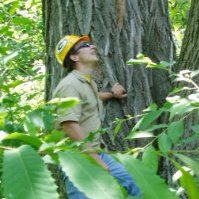 Dr. Greg Nowacki is a 16-year veteran of the USDA Forest Service, a Regional Ecologist, and Acting Leader of the Soils program. His primary field is ecology – the study of the interrelations among plants, animals, and their physical surroundings -- and he is keenly interested in forest stand dynamics, soil-site-vegetation relations and the conveyance of ecological knowledge to natural resource managers. His expertise involves oak-fire ecology, old growth, disturbance ecology, and ecological classification and mapping. He received his PhD in Forestry from Penn State University.


 Loading