
 Creating and Restoring Safe and Accessible Water Sources for Livestock, Bats and Other Wildlife


Webinar Details
When:
May 29, 2012 2:00 pm US/Eastern
Length: 01:40 (hh:mm)
Advance Registration NOT required.
View now on-demand.
Reviewed for Continued Content Relevance: 07/2016
Presenter(s):
- Daniel Taylor, Water for Wildlife Program Coordinator, Bat Conservation International, San Diego, CA
- Stu Tuttle, State Biologist, USDA NRCS Arizona, Phoenix, AZ
CEU Credits/Certificate Offered:
- American Registry of Professional Animal Scientists (ARPAS) - 1 hour ARPAS Credit
- Certificate of Participation
- Conservation Planner (CP) - 1.5 hour Conservation Planning Credit
- Society for Range Management (SRM) - 1.5 hour SRM Credit
- The Wildlife Society - Certified Wildlife Biologist®/Professional Development Certificate Program - 1.5 hour TWS Category 1 Credit
Virtual Event Format:
Group Viewing Available:
Participate in this webinar to receive guidance regarding the implementation of wildlife-friendly measures for livestock watering sources.
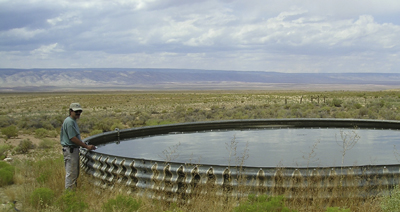
This presentation addresses the importance of providing safe, reliable, and accessible water sources for livestock, bats and other wildlife on western rangelands and elsewhere. The presenters focus on wildlife-friendly measures for livestock water sources because of dramatic changes in the distribution and availability of water sources traditionally used by wildlife and increasing reliance by wildlife on water sources established and managed for livestock. Background information is provided on the life history, ecological and economic importance of bats and livestock and wildlife needs for water. Guidance is provided regarding the design and placement of escape ramps; size, placement, and management of troughs; removal of obstructions/obstacles; and characteristics of wildlife-friendly stock tanks. Recommended wildlife upgrades to NRCS Conservation Practice Standards are outlined by the presenters.
This webinar is sponsored by the USDA NRCS National Wildlife Team located at the Central National Technology Support Center.


 Loading